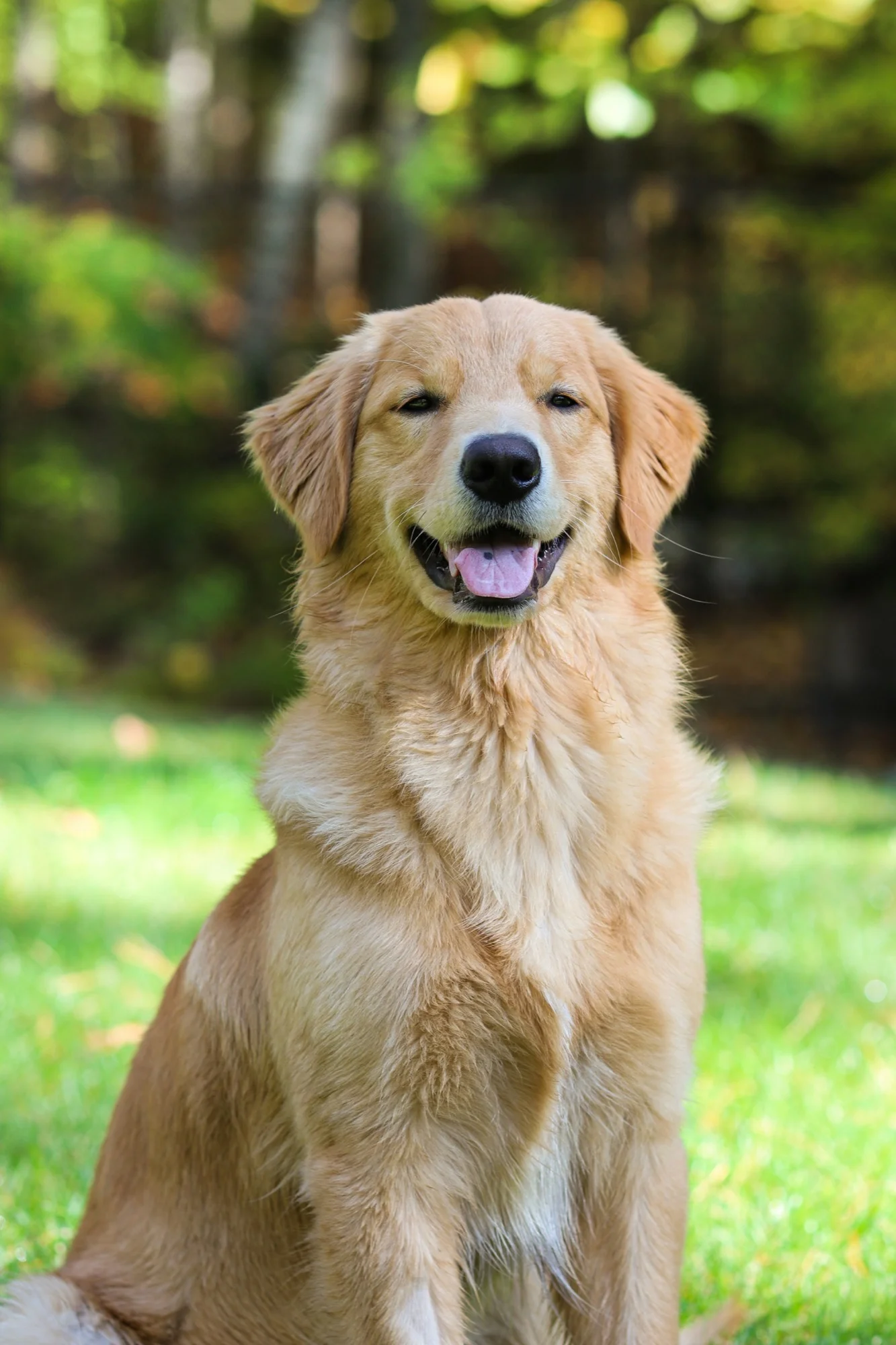
Golden Retriever
The gentle giant of the gun dog world. Patient, loyal, and desperately in need of more than a garden to patrol.
The gentle giant of the gun dog world. Patient, loyal, and desperately in need of more than a garden to patrol.
The Golden Retriever was developed in the Scottish Highlands in the mid-19th century by Dudley Marjoribanks, the first Baron Tweedmouth. His meticulous breeding records — among the most detailed of any breed — show careful crosses between Yellow Retrievers and the now-extinct Tweed Water Spaniel, with later additions of Irish Setter and Bloodhound.
The goal was precise: create the ultimate all-terrain retriever for the gruelling Scottish shoots. That meant a dog that could mark game across hilly, boggy terrain, remember multiple falls, retrieve from icy water, and deliver undamaged birds to hand. Hour after hour, in some of the most demanding landscape in Britain.
It’s the patience and steadiness that makes Goldens seem “easy.” But beneath that calm exterior is a working dog built for six to eight hours of demanding, sustained work. The calm isn’t laziness — it’s bred-in composure that only works when the brain is getting fed.
A Golden in a family home is a working brain running quietly in the background, waiting for instructions that never come. You’ll see it in ways that don’t always look like problems — until they are:
The carrying. Goldens carry things. Shoes, toys, socks, anything they can get in their mouth. This isn’t theft — it’s the soft-mouth retrieve instinct expressing itself. Generations of deliberate selection for careful, gentle carrying created a dog that needs to hold something. When they don’t get structured retrieve work, the instinct finds its own outlet.
The hovering. Following you from room to room, always nearby, always watching. This looks like clinginess but it’s cooperative retrieve drive — a working retriever stays close to its handler, waiting for the next send-out. Your Golden is waiting for a job you haven’t given it.
The “fake laziness.” Goldens can appear relaxed when they’re actually under-stimulated. They don’t bounce off walls like a Lab or destroy like a terrier. Instead they get heavy, mouthy, and withdrawn. It’s easy to mistake a mentally flat Golden for a content one.
The people-pleasing gone wrong. Goldens are so cooperative that they suppress frustration rather than express it. By the time a Golden is showing behavioural issues, the understimulation has usually been building for a long time. They don’t shout for help — they go quiet.
Purpose-built for this. Goldens have exceptional memory for marking fallen game, a natural soft mouth developed through generations of selection, and a cooperative drive that makes them want to deliver to hand. The retrieve instinct is the foundation of everything a Golden does.
Strong and chronically underutilised. Goldens have an excellent nose and are increasingly used in medical detection work — identifying cancers, blood sugar changes, and seizure onset. Most pet Goldens never get to use this drive at all.
Steady, methodical problem-solvers. Goldens don’t rush at challenges the way Collies do — they think through them. Give a Golden a puzzle and it will work patiently until it cracks it. This patience is an asset when channelled, and invisible when ignored.
Moderate. Goldens enjoy pursuit but it’s not a dominant drive. They’ll chase a ball happily but don’t have the intense prey drive of terriers or sighthounds.
Slightly higher than Labs. Some Goldens display mild herding behaviours — body-blocking, circling, nudging family members into groups. This comes from their complex genetic heritage, including the Irish Setter and Bloodhound crosses in their founding lines.
Minimal. Digging isn’t a significant instinct for Goldens. If your Golden is digging, it’s likely boredom or frustration rather than breed drive.
instinct gives a Golden’s patient brain the sustained work it craves. The programme emphasises progressive retrieve challenges and scent work — the two drives that define the breed but rarely get exercised in a family home.
A typical week for a Golden might include: memory retrieves where the dog marks and remembers multiple item locations, blind retrieves where the handler directs the dog to something it hasn’t seen fall, and cooperative handler-directed searches that build the partnership Goldens were bred for.
A Golden on a structured programme becomes visibly more content. The hovering eases. The mouthiness settles. The quiet withdrawal lifts. You’re not changing the dog — you’re finally feeding the brain that’s been waiting.
Goldens became the breed of choice for guide dog organisations worldwide. Guide Dogs UK uses more Goldens and Labrador-Golden crosses than any other breed — the patience, biddability, and soft temperament make them exceptional partners.
The Golden Retriever has unusually well-documented origins. Dudley Marjoribanks kept meticulous stud books from 1835 to 1890, later donated to the Kennel Club. Few breeds have such a clear paper trail from creation to recognition.
Goldens have appeared in more family films than any other breed. Air Bud, Homeward Bound, Full House — when Hollywood needs a dog that looks like home, it reaches for a Golden every time.
The Golden Retriever Lifetime Study follows over 3,000 Goldens throughout their lives to study cancer — the breed’s most significant health challenge. It’s one of the largest and longest veterinary studies ever undertaken.
Golden owners share videos of dogs carrying items to greet visitors at the door. Some Goldens maintain a dedicated “present” near the front door so they always have something to offer. It’s the retrieve instinct in its purest domestic form.
No spam. Just one email when we launch. Unsubscribe anytime.