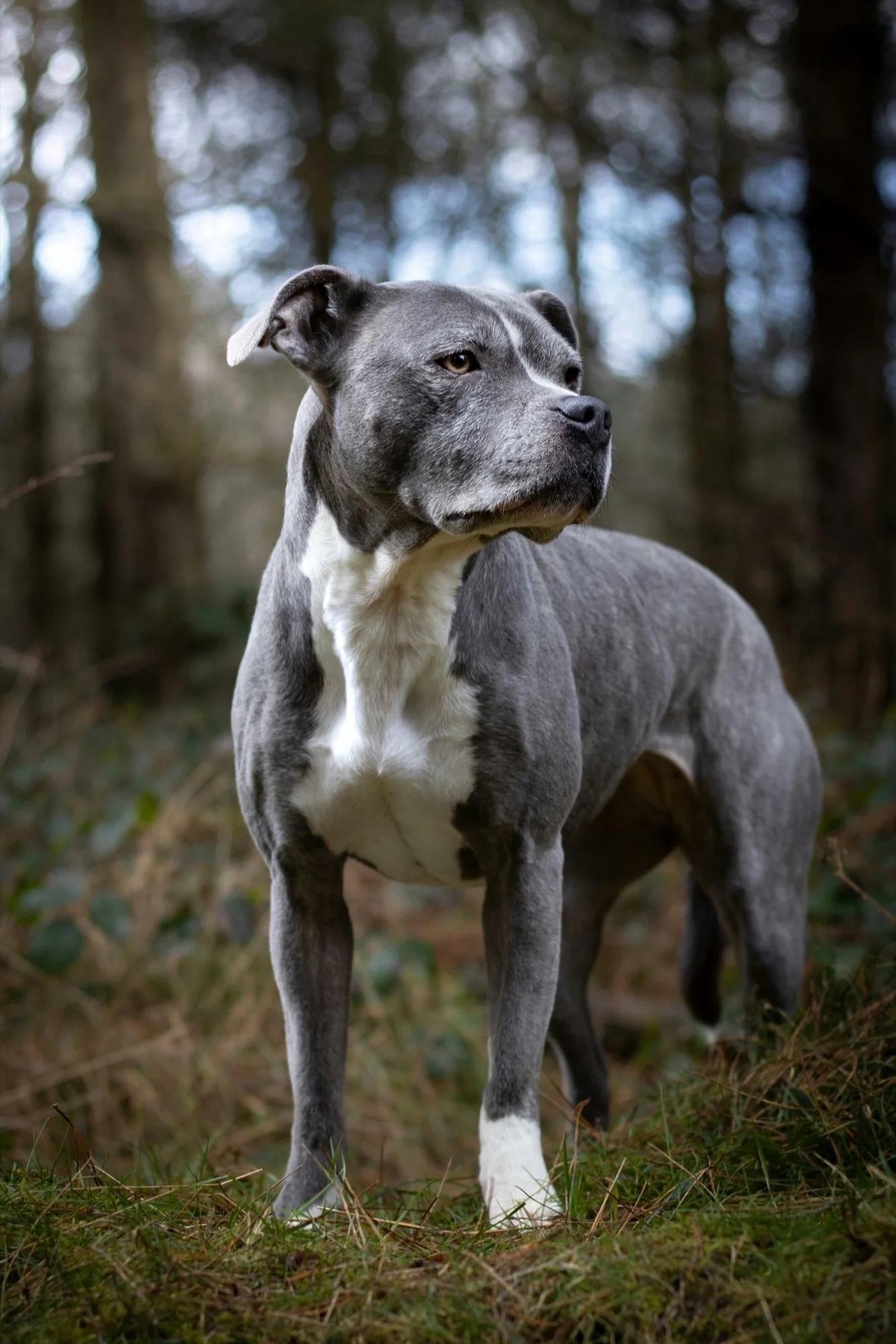
Staffordshire Bull Terrier
The Nanny Dog. Loyal, strong, and wildly misunderstood. Your Staffy needs more brain work than you think.
The Nanny Dog. Loyal, strong, and wildly misunderstood. Your Staffy needs more brain work than you think.
The Staffordshire Bull Terrier was developed in the English Midlands in the 19th century from crosses between Bulldogs and terriers. The original purpose was blood sports — bull-baiting, bear-baiting, and later dog fighting — demanding extraordinary physical courage, tenacity, and a high pain threshold.
When blood sports were banned, the breed was refined into a family companion, retaining the physical courage and fierce loyalty but channelling it into devotion to people — especially children, earning the nickname “the Nanny Dog.” The Kennel Club recognised the breed in 1935.
What persists is the physical engagement instinct — tug, grip, shred, dig, push through obstacles with extraordinary tenacity. This is not aggression. It’s bull-and-terrier drive: the need to use the body, engage the jaws, and work through physical challenges with a determination that outlasts almost every other breed.
The destruction. Staffies destroy toys faster than any other breed you’ll meet. This isn’t naughtiness — their jaws were built to grip and shred. A toy that lasts a Labrador a month will last a Staffy ten minutes. They need sanctioned destruction: things they’re allowed to tear apart.
The tug obsession. Tug engages everything a Staffy was built for — grip, strength, competitive drive, and physical contact with their person. A good tug session is one of the most fulfilling things you can offer this breed.
The physicality. Staffies play with their whole body — wrestling, pushing, bouncing. They’re compact, muscular dogs who experience the world through physical contact and physical effort.
The people-love. Among the most people-oriented breeds alive, Staffies are devastated by separation. Their loyalty is absolute. The same dog that was bred for physical courage will fall apart if left alone too long, because the one thing they can’t handle is being away from their person.
In the instinct framework, Dig covers physical manipulation — digging, shredding, tearing, gripping. This is the Staffy’s primary drive. They need sanctioned destruction: things to rip apart, boxes to shred, toys to disembowel, ground to dig. Without these outlets, they’ll create their own — and your sofa cushions are the obvious candidate.
The bull-and-terrier heritage gives Staffies a strong pursuit drive. Flirt poles are essential for this breed — they combine chase, grip, and physical exertion in one activity. Building impulse control around the chase (wait, release, pursue) channels this instinct productively.
Often underestimated. Staffies are intelligent, determined dogs, and their persistence means they will work at a puzzle long after other breeds have given up. This cognitive ability needs an outlet — if a Staffy decides to solve the problem of “how to get into the kitchen bin,” they won’t stop until they’ve succeeded.
Many Staffies enjoy fetch, especially when combined with tug. The retrieve is often less about the carry-and-deliver and more about the chase-and-grip — they’ll happily fetch a ball but may need convincing to give it back.
A secondary drive. Staffies have capable noses but scent work isn’t their primary instinct.
Minimal. Herding behaviour is largely absent from the bull-and-terrier group.
instinct prescribes a daily mix weighted toward physical and cognitive outlets. Destruction challenges form the foundation — sanctioned shredding, digging pits, tug games with rules — alongside chase outlets like flirt pole work with built-in impulse control, and persistence puzzles that reward the Staffy’s refusal to give up.
Staffies are the most commonly found breed in UK shelters. The vast majority arrive for “behavioural issues” that are really unmet physical instincts. A Staffy that gets to shred, tug, chase, and solve every day is a different animal from one that’s expected to lie quietly on a sofa with nothing to do. instinct gives you the daily programme that turns bull-and-terrier drive into something that works for both of you.
A close cousin of the Staffy (American Pit Bull type), Sergeant Stubby is the most decorated war dog in American history. He served in 17 battles during World War I, detected gas attacks before alarms sounded, located wounded soldiers on the battlefield, and even caught a German spy by the seat of his trousers.
Staffies were historically trusted with children to a degree that surprises people unfamiliar with the breed. The Kennel Club breed standard specifically notes “particular affection for children” — one of the only breed standards in the world that mentions children by name.
Staffordshire Bull Terriers are the most commonly found dogs in UK rescue centres. They make up a significant proportion of the intake at Battersea Dogs & Cats Home and shelters nationwide — not because they’re bad dogs, but because their needs are consistently misunderstood.
Staffies have the strongest bite force relative to body size of any breed, with extraordinary jaw and neck musculature. That power was bred for grip and hold — which is why tug is such a natural and fulfilling activity for them.
In temperament tests, Staffies score among the most people-friendly breeds — often higher than Chihuahuas and Dachshunds. The gap between their reputation and their tested temperament is one of the widest of any breed.
Join the waitlist and be first to unlock your Staffy’s instinct profile when instinct launches.
No spam. Just one email when we launch. Unsubscribe anytime.