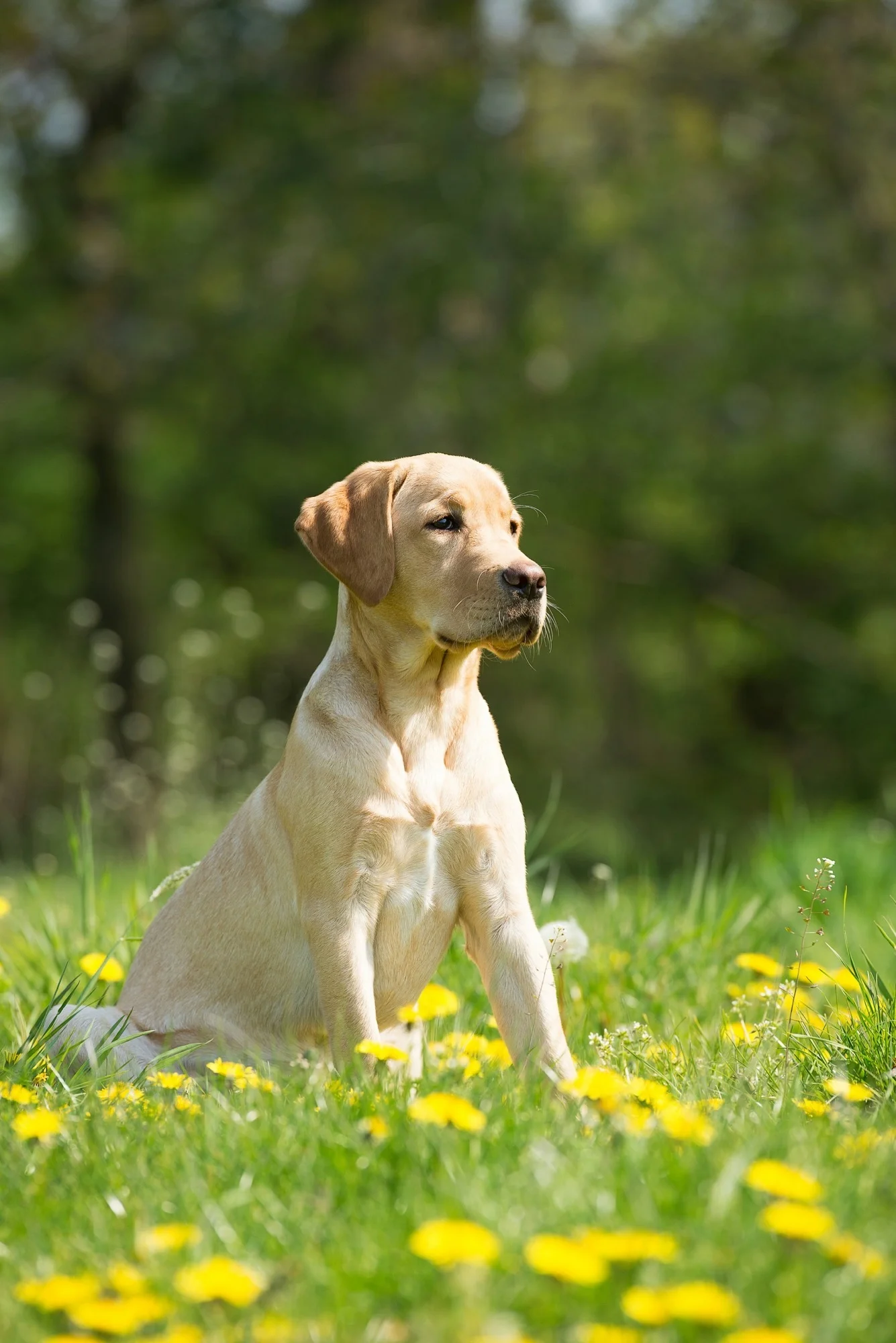
Labrador Retriever
The UK’s most popular dog. Over a million in British homes. Most of them have never done the job they were bred for.
The UK’s most popular dog. Over a million in British homes. Most of them have never done the job they were bred for.
The Labrador Retriever didn’t start as a family pet. It started as a fisherman’s dog on the coast of Newfoundland in the early 1800s — hauling nets, retrieving fish that escaped the lines, and swimming through freezing North Atlantic water for hours. British aristocrats visiting Newfoundland noticed these tireless water dogs and brought them back to England, where they were refined into the gun dog we know today.
By the mid-19th century, Labs were the retriever of choice for British shooting estates. Their job was precise and demanding: mark the fall of shot game, remember multiple locations, navigate difficult terrain and water, pick up the bird with a mouth soft enough not to damage it, and deliver it to the handler’s hand. This required extraordinary memory, a cooperative temperament, stamina in cold water, and an almost obsessive desire to carry things.
That obsessive desire didn’t go away when Labs moved into family homes. It just lost its purpose. The same dog that was bred to remember the location of three fallen birds across a 200-acre estate now carries your slippers to the front door because it has nothing else to retrieve.
A Lab in a family home is a retrieval brain running on empty. You’ll see it everywhere:
The mouthing. Labs carry things. All the time. Shoes, socks, toys, cushions, the post, the remote, children’s toys. This isn’t stealing — it’s the retrieve instinct looking for something to hold. Labs that don’t get to retrieve properly develop hard mouths — they start chewing and destroying instead of carrying gently.
The food obsession. Labs are famously food-motivated, partly because their scent drive makes food overwhelmingly compelling, and partly because a genetic mutation (identified in a 2016 Cambridge study) affects the appetite regulation of many Labs. Channelling the scent instinct through food-based enrichment works with this biology rather than against it.
The inability to settle. A Lab that hasn’t used its brain bounces off walls. They’re big dogs with big energy, and if the retrieve and scent instincts aren’t being worked, that energy has nowhere to go except your furniture.
The “selective listening.” Labs are biddable dogs, but when the scent instinct kicks in, they follow their nose first and your voice second. That’s not disobedience — it’s a 200-year-old instinct overriding a 5-minute-old command.
This is the core. Labs were built to find, carry, and deliver. The retrieve instinct drives their mouthing, their desire to hold things, their love of water, and their cooperative relationship with their handler. It’s also why they’re so widely used as assistance dogs — the retrieve drive makes them natural partners.
Often overlooked in Labs, but critical. Labs are used as detection dogs for drugs, explosives, and medical conditions precisely because their nose is exceptional. Pet Labs rarely get to use it. Scent work is one of the fastest ways to tire a Lab out.
Labs are intelligent problem-solvers. They figure out gates, doors, treat dispensers, and baby-proofing faster than most owners expect. This cognitive ability needs an outlet or it turns into counter-surfing and bin-raiding.
Present but secondary. Labs enjoy pursuit games but don’t have the intense prey drive of terriers or sighthounds.
Minimal. Labs don’t typically herd, though some will body-block or nudge.
Minimal. Some Labs dig, but it’s not a primary instinct.
instinct prescribes a daily mix weighted toward retrieve and scent work, with cognitive challenges to keep the problem-solving brain engaged.
A typical week for a Lab might include: a structured memory retrieve (mark two items, retrieve them in sequence), a kitchen scatter feed that turns breakfast into a scent game, a “find it” trail laid through the garden, a cooperative retrieve-and-deliver sequence that builds the soft mouth, and a layered puzzle that requires the dog to solve a physical problem to access a reward.
Ten minutes. One activity. Calibrated to the instinct mix that makes your Lab a Lab.
Widely considered the most decorated dog in the world. A yellow Lab who served as an assistance dog to Gulf War veteran Allen Parton, Endal could operate ATMs, shop in supermarkets, and load the washing machine. He was named Dog of the Millennium by the Kennel Club.
A 2016 study by the University of Cambridge found that many Labradors carry a mutation in the POMC gene that affects their ability to feel full. It’s not greed — it’s genetics. About a quarter of all Labs carry the variant.
The breed’s ancestor, the St. John’s Water Dog, is now extinct. Every Lab alive today descends from a small number of dogs brought to England from Newfoundland in the early 19th century.
Labs have been the UK’s number one breed for over 30 years. There are an estimated 1 million+ in British homes. In 2024, 34,141 new Labs were registered with the Kennel Club — nearly 50% more than the second-place Cocker Spaniel.
Labs were bred to retrieve game without damaging it. A well-trained Lab can carry a raw egg in its mouth without cracking it.
No spam. Just one email when we launch. Unsubscribe anytime.