Herd
Control, pattern, anticipate.
The instinct to organise movement — and the reason your Collie won’t stop circling the kids.
The instinct to organise movement — and the reason your Collie won’t stop circling the kids.
Herding is one of the most cognitively demanding instincts in any breed. It’s not just running around sheep. It’s reading movement patterns in real time, predicting where a flock will break, positioning the body to apply just enough pressure to redirect without scattering, and constantly recalculating as the situation changes. A herding dog’s brain operates like a chess player — always several moves ahead.
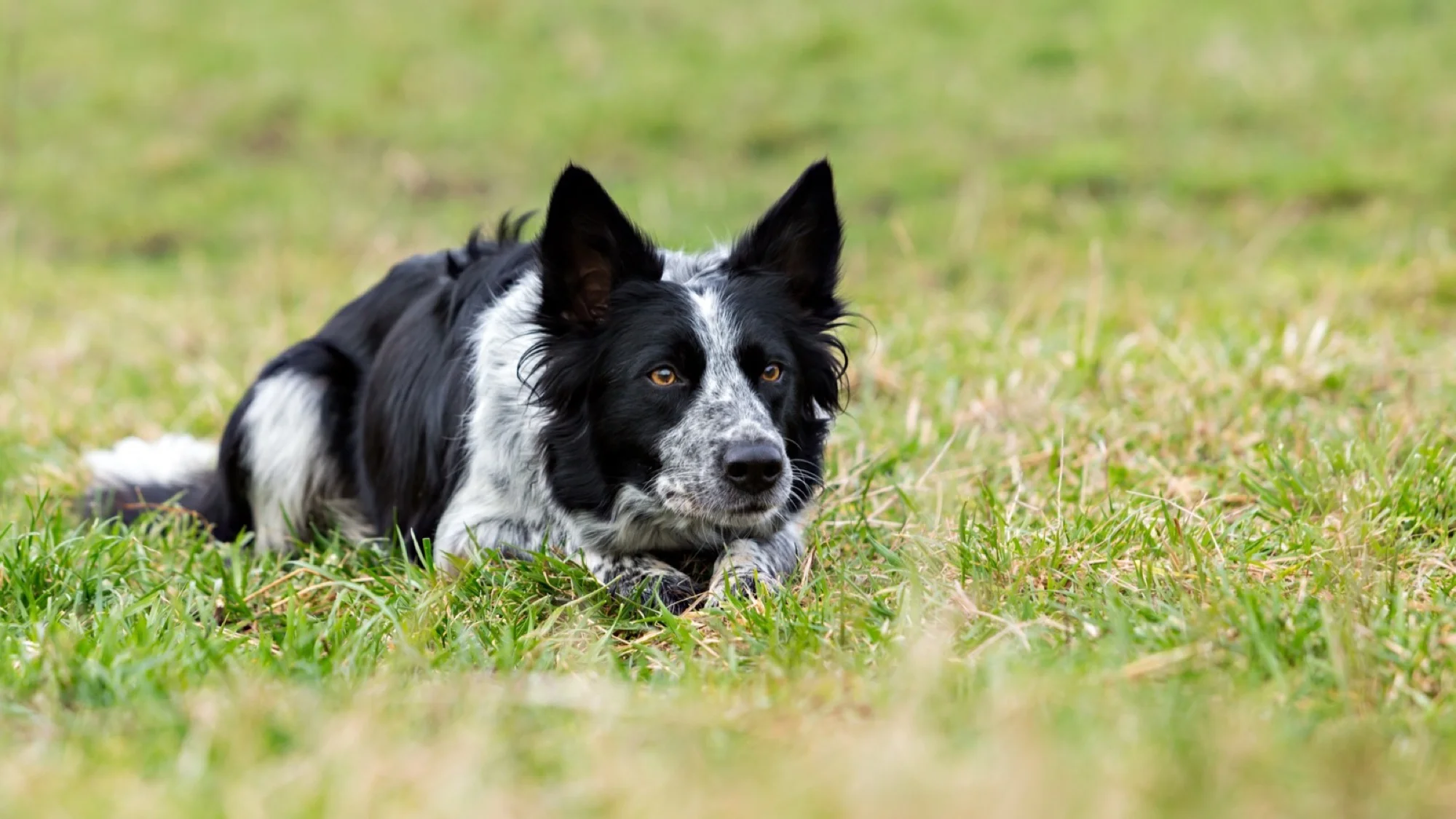
This instinct was refined over centuries in working sheepdogs, cattle dogs, and droving breeds. The famous Border Collie “eye” — that low, crouching, intense stare — is a modified predatory behaviour that’s been selectively channelled into livestock control. It’s not aggression. It’s control.
The herding instinct shows up as a need to organise and manage movement in the environment. When there are no sheep, the instinct doesn’t disappear. It redirects. Onto children. Onto other dogs. Onto cyclists. Onto anything that moves in a way the dog’s brain wants to manage.
The most herding-intense breed alive. Selectively bred for “eye,” balance, and the ability to work a flock with minimal handler input. Also the most rehomed working breed in the UK, overwhelmingly because owners underestimate the cognitive demands.
High-drive herding dogs that combine intense work ethic with handler focus. They need a job, and if they don’t have one, they’ll create one — usually involving your household.
Smaller but no less driven. Bred to herd ponies, poultry, and sheep on the Shetland Isles. Their herding instinct often manifests as vocal management — barking to control movement.
Cattle droving dogs. Low to the ground so they could nip heels and duck under kicks. That heel-nipping instinct is alive and well in family homes.
Originally a herding breed before being adopted by police and military. Extreme drive, extreme focus, extreme need for cognitive work.
Developed as a herding and guarding breed. The combination of herding drive and protective instinct makes them intensely responsive to movement and perceived threats.
The herding brain doesn’t dilute easily in crosses. If there’s Collie or Aussie in the mix, expect herding behaviours to show up.
You’ll recognise the Herd instinct in your dog if they:
If your dog treats your household like a flock that needs managing, you’re living with a herding brain.
A herding dog without work is a dog in crisis. Their brain is built to process complex movement patterns for hours a day, and in a typical home, the most complex movement pattern is the washing machine cycle.
Unfulfilled herding drive manifests as obsessive behaviours: shadow chasing, light chasing, spinning, fixating on reflections. It shows up as nipping — at ankles, heels, hands, other dogs. It drives reactivity on walks because every moving thing triggers the herding response. And it creates a dog that physically cannot settle, because the part of the brain responsible for organising movement never gets to do its job.
Border Collies are the breed most commonly referred to canine behaviourists. Not because they’re badly bred. Because they’re brilliantly bred — for a job that 99% of their owners can’t provide.
instinct prescribes activities that engage the herding brain without requiring a flock of sheep. The focus is on pattern recognition, movement control, impulse management, and spatial problem-solving.
Foundation activities include directional games (“go around” objects), body blocking exercises where the dog learns to hold position, and pattern-based treat placement that rewards spatial thinking. Intermediate challenges introduce herding ball work (using a large ball the dog can push and control directionally), multi-point movement sequences, and structured “outrun” exercises adapted for garden settings. Advanced work channels the herding brain into complex spatial puzzles, remote directional commands, and movement choreography that satisfies the need to control without redirecting onto people or animals.
A 15-minute herding brain session replaces the cognitive load of an hour-long walk. Because the walk was never the problem — the lack of pattern work was.
Here’s what a herding-focused day might look like in the app.
A traffic cone, bucket, or any upright object
A large ball they can push but not pick up (yoga ball or herding ball)
A mat, bed, or towel — and some patience
Join the waitlist and discover how to work your Collie’s mind the way it was built to be worked.
No spam. Just one email when we launch. Unsubscribe anytime.