Chase
Pursue, flush, catch.
The predatory motor sequence — hardwired into your dog’s brain and desperate for an outlet.
The predatory motor sequence — hardwired into your dog’s brain and desperate for an outlet.
Chase is the instinct to pursue moving targets with focus, speed, and determination. It’s part of the predatory motor sequence — the ancient behavioural chain that runs: orient → eye → stalk → chase → grab → kill → dissect → consume. Different breeds were developed to express different parts of this sequence, but the chase component is one of the most common and most powerful.
This isn’t about aggression. A dog chasing a ball isn’t trying to kill it. They’re expressing a deep-seated neurological drive that produces dopamine, adrenaline, and genuine satisfaction. When a Lurcher locks onto a rabbit, when a Terrier bolts after a squirrel, when a Collie chases a cyclist — they’re running software that was written thousands of years ago.
The problem is that modern life offers very few safe outlets for chase. Most of the things dogs want to chase — squirrels, cats, joggers, bikes, other dogs — are things we need them not to chase. Without controlled alternatives, the chase drive builds pressure until it finds its own outlets. And those outlets are rarely convenient.
Sighthounds bred to chase prey by sight at extraordinary speed. Their chase instinct is explosive and singular — once triggered, almost nothing else exists.
Bred to bolt foxes from their dens and keep up with horses on the hunt. Small body, enormous chase drive. Will pursue anything that moves, including leaves.
Developed for fox hunting, with a prey drive that massively exceeds their body size. The most commonly surrendered terrier in UK shelters, often because owners didn’t expect such intensity from a small dog.
Bred to flush game from cover, which requires bursts of explosive chasing through dense undergrowth. That’s why your Cocker disappears into bushes on every walk.
Versatile hunting dogs with a strong chase drive coupled with incredible stamina. They don’t just chase — they chase at speed for hours.
Originally bred to run, with a prey drive that surprises owners who chose the breed for its looks. High chase, high stamina, low recall — a challenging combination without outlets.
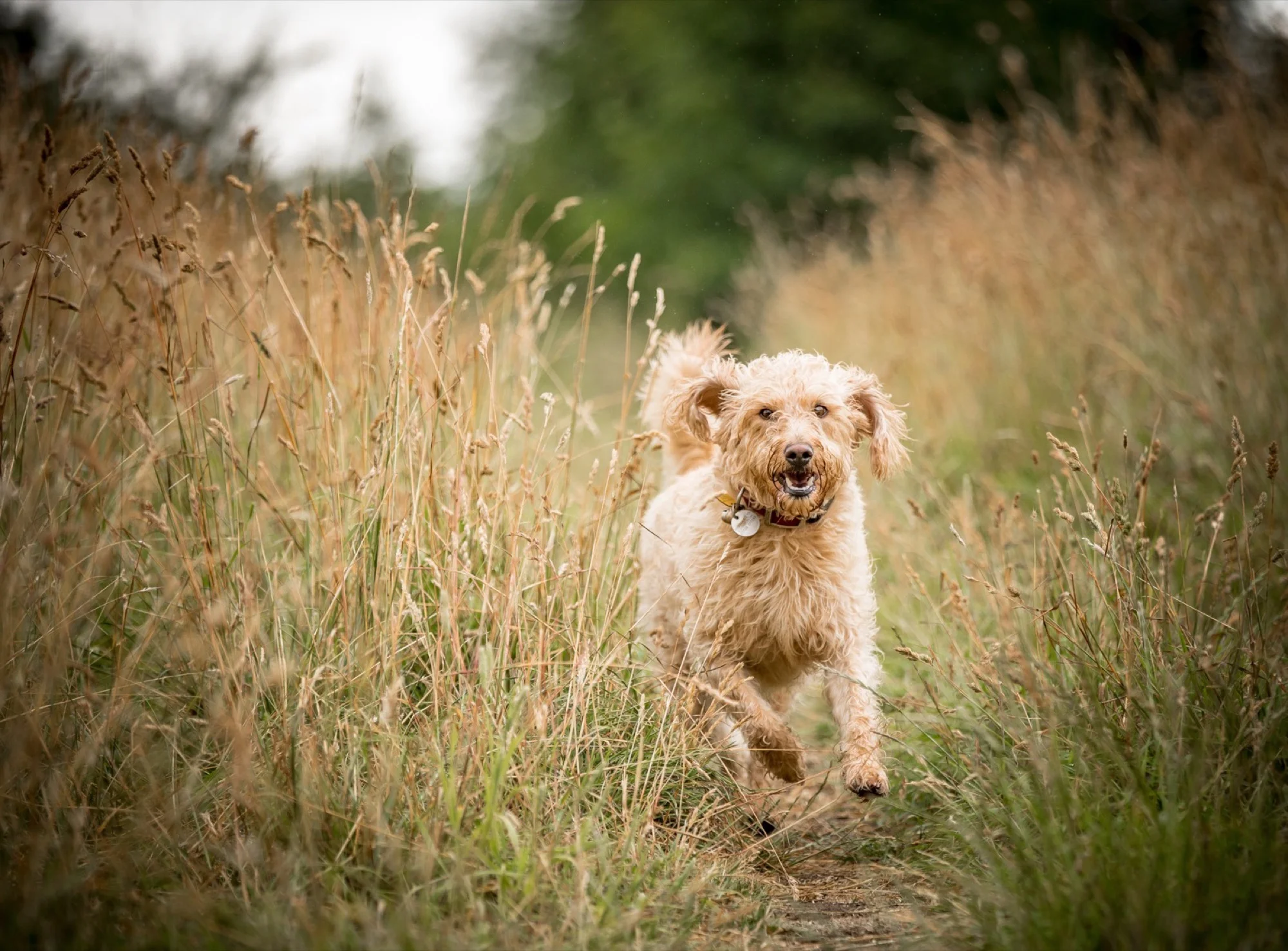
Many doodle and spaniel crosses inherit a chase drive from the working side that catches owners off guard. If your cross locks onto pigeons in the park, that’s the chase instinct talking.
You’ll recognise the Chase instinct in your dog if they:
If your dog’s eyes go wide and their body stiffens the moment something moves, you’re living with a chase-driven brain.
An unfulfilled chase drive doesn’t fade. It escalates. Dogs start chasing shadows, light reflections, their own tail. They become reactive on walks — lunging at every bird, cyclist, or jogger. Recall disintegrates because no treat competes with the dopamine hit of a chase.
In the worst cases, unfulfilled chase drive turns dangerous. Dogs escape gardens to chase cats. They bolt across roads after squirrels. They redirect onto children running in the park — not with aggression, but with an instinct that doesn’t distinguish between a rabbit and a toddler.
The solution isn’t to suppress the chase drive. It’s to give it safe, controlled outlets that satisfy the neurological need without the risk.
instinct prescribes chase activities that satisfy the pursuit drive in controlled settings. The key principle is that the dog gets to chase, but the chase has rules.
Foundation activities include flirt pole games with structured start/stop cues, controlled ball chases with impulse control waits, and “chase the treat” scatters in enclosed spaces. Intermediate challenges introduce chase-and-stop sequences that build impulse control alongside the dopamine hit, pursuit games with directional cues, and multi-target chases where the dog learns to disengage and redirect. Advanced work channels the chase drive into structured activities like lure coursing, controlled retrieve sprints, and patterned movement games.
The goal isn’t to tire the chase drive out. It’s to satisfy it — and build the impulse control that makes a chase-driven dog safe and trustworthy off-lead.
Here’s what a chase-focused day might look like in the app.
Flirt pole or a long rope with a toy tied to the end
A handful of treats, a hallway or long room
Two identical toys
Join the waitlist and find out how strong your dog’s chase instinct really is.
No spam. Just one email when we launch. Unsubscribe anytime.