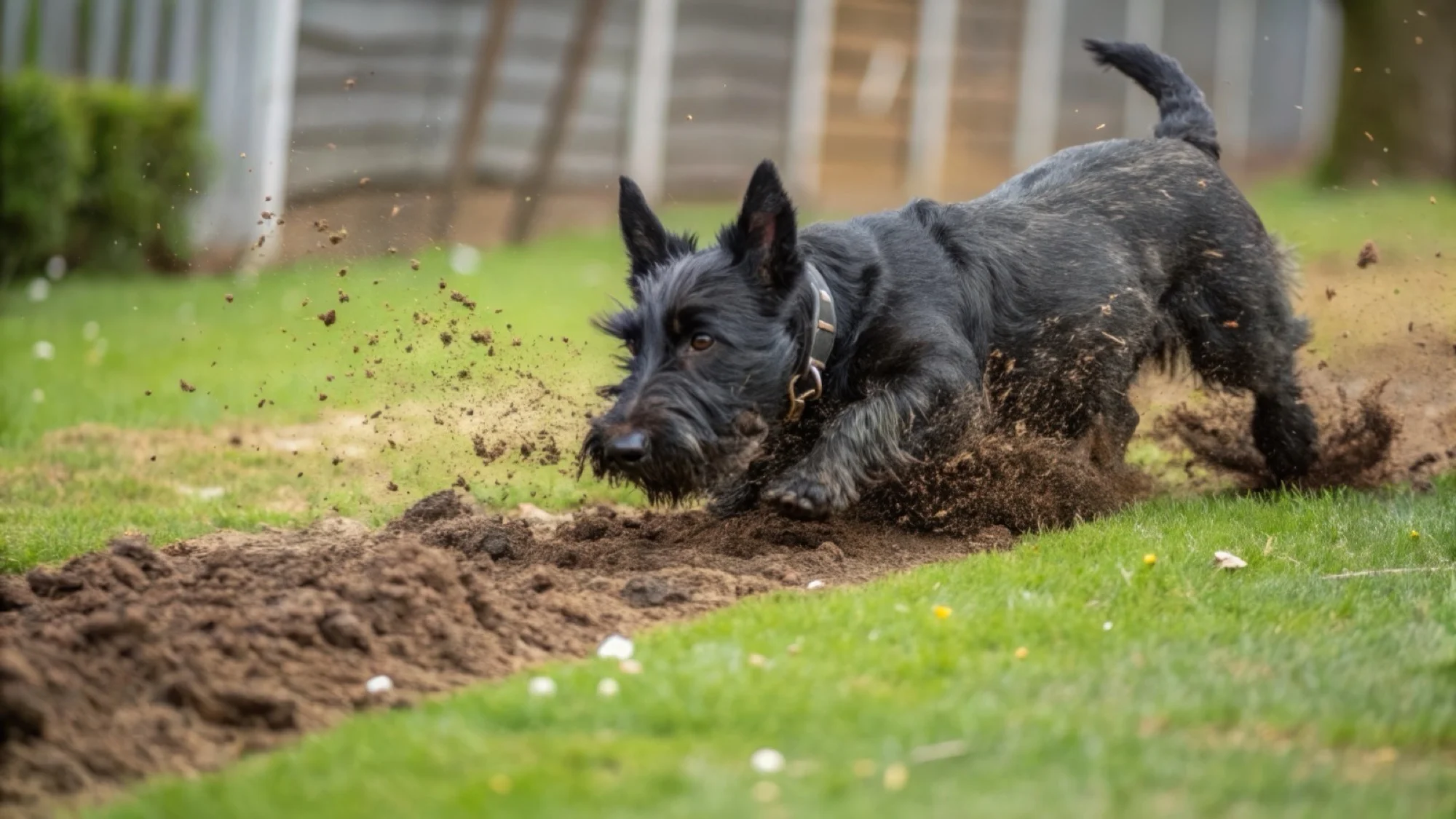
Dig
Excavate, destroy, persist.
Physically manipulating the environment. Tenacity made physical — and the reason your terrier has redecorated the garden.
Physically manipulating the environment. Tenacity made physical — and the reason your terrier has redecorated the garden.
The Dig instinct is the drive to physically engage with the environment — digging, shredding, tearing, going to ground. It’s the most tactile of the six instincts, and it’s often the most misunderstood. When your dog destroys a cushion, dismantles a toy in three minutes, or excavates a hole in the lawn, they’re not being naughty. They’re expressing an instinct that was specifically bred into them.
Terrier breeds were developed to go underground after prey — badgers, foxes, rats. This required a dog that was persistent, physically bold, willing to dig through earth and squeeze through tight spaces, and completely undeterred by discomfort. The “tenacity” that terrier owners describe is not a personality trait. It’s a bred-in working quality.
Beyond terriers, the dig instinct appears in any breed with earth-dog heritage, and in breeds that were developed to physically manipulate their environment — pulling nets, clearing vermin, or working in dense cover.
Bred to bolt foxes underground. Their digging and destroying isn’t boredom — it’s a working instinct trapped in a domestic setting. The most surrendered small breed in the UK.
Developed to be small enough to follow a fox underground but tough enough to keep going. Tenacious, independent, and physically oriented in their play.
Originally bred for bull-baiting (now long obsolete), with a powerful grip, high physical engagement, and a love of tug and shred activities. One of the most commonly found breeds in UK shelters.
The name literally means “badger dog.” Bred to follow badgers into their setts underground. Their long body is a digging adaptation. Despite their modern lap-dog reputation, they have formidable dig and destroy instincts.
Bred to root out vermin from cairns (rock piles) in the Scottish Highlands. Compact, determined, and will shred soft furnishings with ancestral enthusiasm.
Bred for otter and badger hunting. Needs physical outlets for the digging and tearing instinct, or will find them independently in your home.
Terrier drive persists strongly through crosses. If there’s terrier in your dog, expect the Dig instinct to be a significant need.
You’ll recognise the Dig instinct in your dog if they:
If your dog treats soft furnishings as a construction challenge, you’re living with a dig-driven brain.
An unfulfilled dig instinct is one of the most expensive. These are the dogs that destroy sofas, rip up carpets, excavate gardens, and shred anything left within reach. Owners often interpret this as separation anxiety or spite, but in many cases it’s a tactile instinct with no authorised outlet.
Terriers and bull breeds with unfulfilled dig instincts often develop compulsive shredding behaviours — destroying every toy within minutes, stripping wallpaper, chewing through door frames. The persistence that was bred into them for going underground now gets directed at your home.
The frustration also shows up as mouthing and rough play. Dogs that need physical manipulation of their environment become mouthy, grabby, and hard to manage because their jaws and paws never get to do the work they were designed for.
instinct prescribes physically satisfying activities that give the dig instinct a legitimate target. The principle is simple: if they’re going to dig, shred, and destroy, give them things that are designed to be dug, shredded, and destroyed.
Foundation activities include digging pits (a designated area filled with sand or soil with buried rewards), shredding stations (cardboard boxes stuffed with paper and hidden treats), and tug games with structured rules and impulse control cues. Intermediate challenges introduce layered destruction puzzles (nested boxes, wrapped bundles, multi-layer hides), supervised digging trails where the dog excavates a series of buried rewards, and physical manipulation games that require persistence and problem-solving. Advanced work channels the instinct into structured activities like barn hunt preparation, advanced tug sequences with handler cooperation, and complex physical puzzles that require sustained effort over time.
These dogs need to use their paws and their jaws. Give them something worth destroying and they’ll leave your sofa alone.
Here’s what a dig-focused day might look like in the app.
A cardboard box, scrunched newspaper, a few treats
A sandpit, planter, or patch of loose soil — plus treats or a favourite toy
A tug toy (rope or braided fleece)
Join the waitlist and find out how to channel your dog’s destroy instinct into something you’ll both enjoy.
No spam. Just one email when we launch. Unsubscribe anytime.